
Role
Product Designer
Services
Website
Marketplace
Backend dashboard
Industries
SEO
Backlink
Duration
5 weeks
This project involved designing an end-to-end system made up of three products: a marketing website to explain and position the offering, a marketplace where users can buy and sell backlink services, and a backend dashboard to manage operations, verification, payments, and support.
This case study is covered under a Non-Disclosure Agreement (NDA). To maintain confidentiality, the product name, live links, and original UI visuals are not disclosed. The focus is on design thinking, decisions, and system logic rather than visual details.

I led the product design for this project end-to-end. Along with designing the user experience, I was responsible for defining the system logic behind the marketplace, from information architecture, sitemap, and core flows to admin controls, finance & escrow payment handling, and backlink verification mechanisms.
A backlink is a link from another website to your website, helping search engines understand that your site is trustworthy and relevant.
A backlink service is an SEO service that builds high-quality links from other websites to improve a site’s search rankings, visibility, and authority.
At the beginning, the problem felt very simple. We just wanted to build a marketplace where users can buy and sell backlinks. On the surface, it sounded like a straightforward buy-sell product. But once we started looking at it closely, it became clear that this was not really a marketplace problem; it was a systems problem.
Backlinks come with trust, verification, payments, disputes, and operations. To make the experience actually work in the real world, we realized we couldn’t solve everything in one place. We needed three connected products
Marcom Website
01
The entry point to the product used to explain what the marketplace is, how it works, and why users should trust it.
Market place
02
The core product where users buy and sell backlink services, manage listings, place orders, communicate, and complete transactions.
Backend Dashboard
03
The operational layer used to manage listings, users, orders, payments, verification, disputes, and overall platform health.
Once the problem was clear, the next step was understanding who this system is for and how access should work. Through research, it became clear that this product has three core users, each with different responsibilities and levels of control.
The research started by focusing on roles, permissions, and workflows how each user enters the system and what they need access to.
(Abstract view)
Buyer
Buyers use the platform to purchase backlink services.
Access:
Marketing website
Marketplace
Buyer dashboard
Seller
Sellers offer backlink services through the platform.
Access:
Marketing website
Marketplace
Seller dashboard
Listings, order & payouts
Admin
Admins manage and operate the entire system.
Access:
Backend dashboard
listings, orders & payments
Verification, disputes, tickets, and permissions
We started by feeding detailed product context into ChatGPT to generate an initial text-based information architecture. This helped define the structure for the website, marketplace, and backend. We then used XMind to visualize this structure and refine it further, filtering out unnecessary sections and adjusting the hierarchy based on real user needs. The result was a clear and scalable information architecture across all three products.
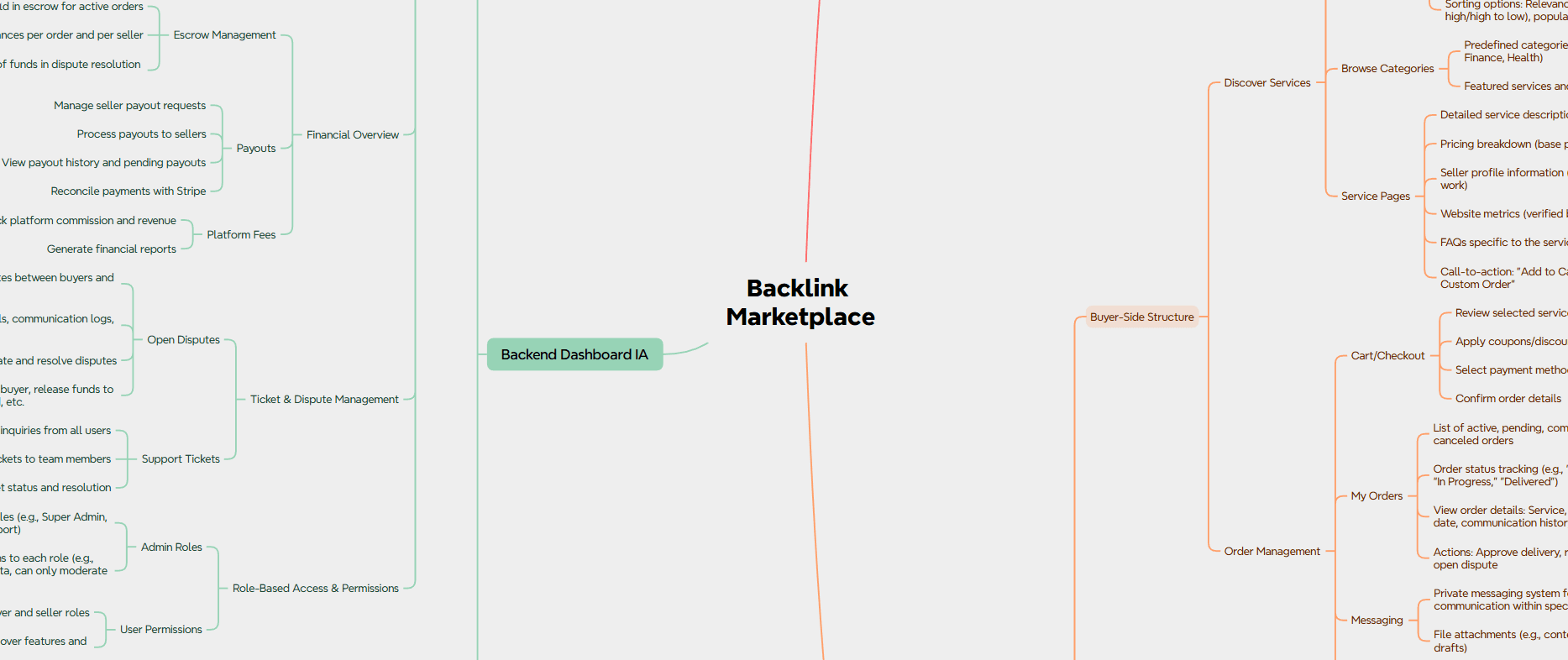
Source: Conceptual IA generated using XMind AI
We used an AI to move faster due to tight timelines. We started by structuring content and hierarchy using ChatGPT and used tools like AI Studios, Claude, and Vercel to quickly visualize how the system would work. Whenever the structure or hierarchy became unclear, we explored alternatives using other AI tools and filtered out the most logical solution.
Once the structure was clear, we recreated everything in Figma . We built it using a design system so we could make changes easily, maintain consistency, and ensure smooth developer handoff.
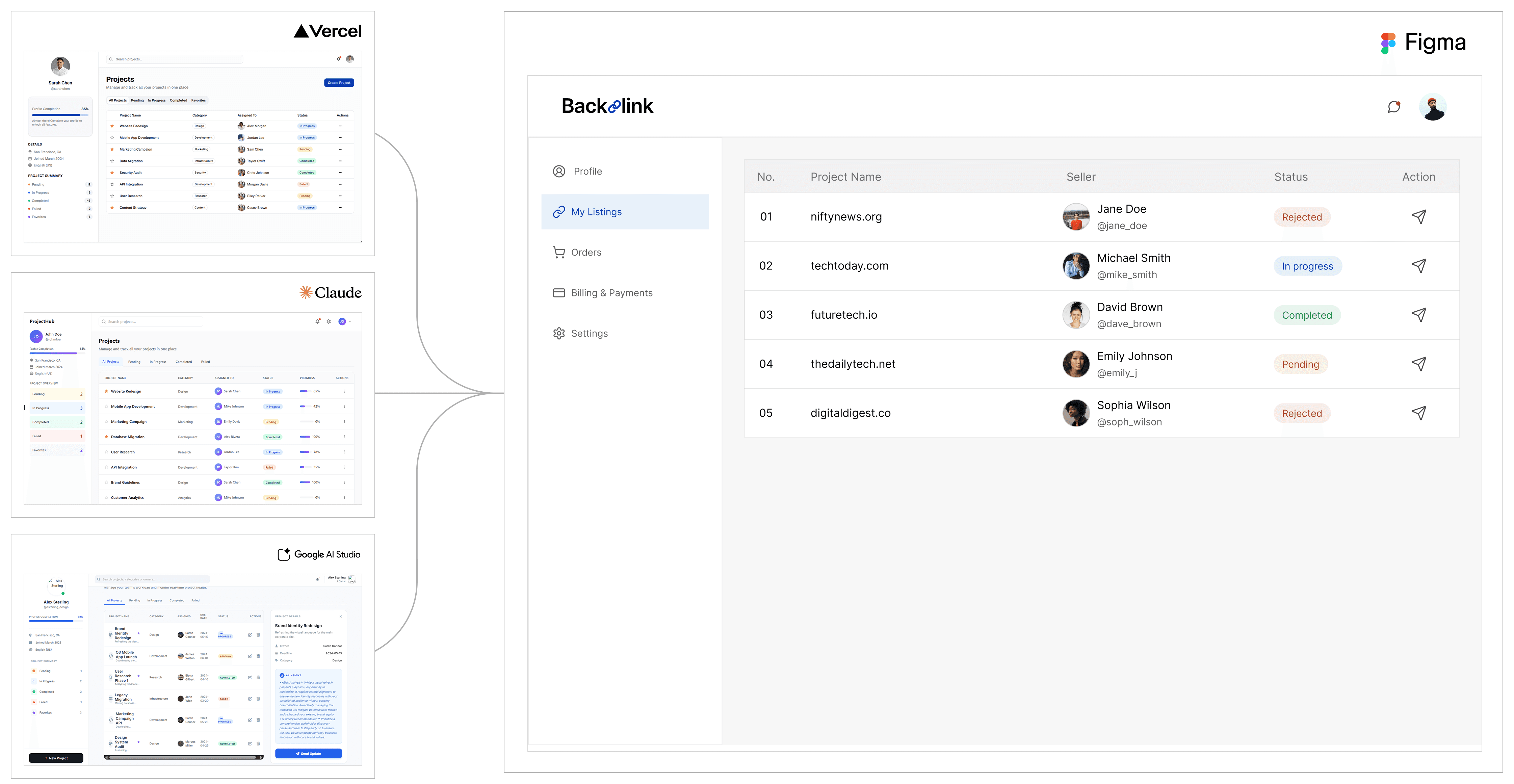
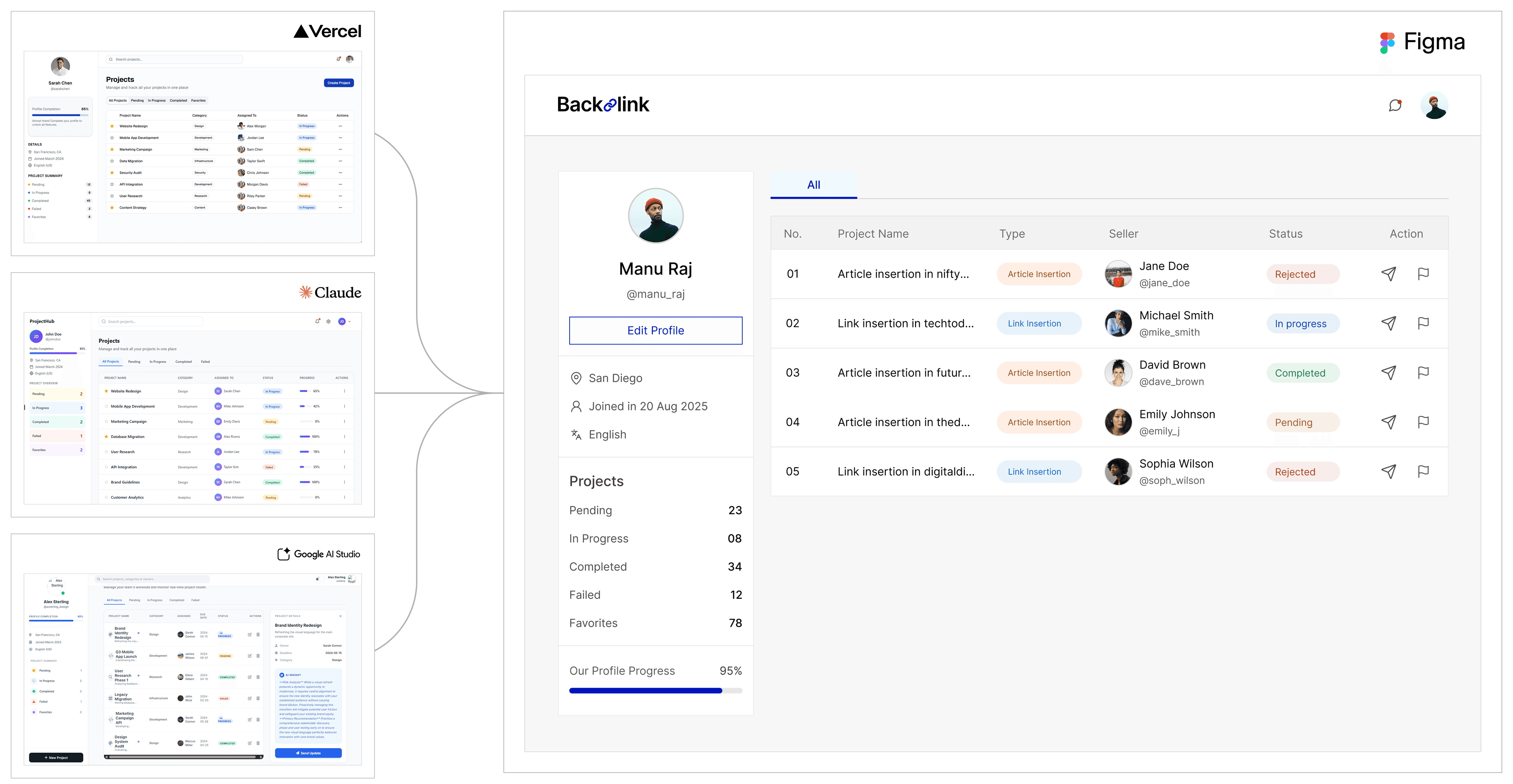
Infographic representation of the AI-driven design process ( conceptual )
(Ongoing)